Your puppy doesn’t need a backyard empire to become a confident, social butterfly. Apartment life can actually make socialization easier because you control the encounters and keep them short and sweet. The trick?
Plan a bunch of low-stakes, positive experiences and stack tiny wins. Ready to turn hallway sniff-meets and elevator rides into social gold?
Rethink “Socialization” (It’s Not Just Dog Parks)
Most people think socialization means throwing your puppy into a dog park and hoping for the best. Hard pass.
Real socialization means teaching your pup, “New stuff equals good stuff.” We want curiosity, not chaos. Focus on variety over volume. Your pup should experience different:
- People: tall, short, hats, beards, kids (from a distance at first), folks with canes or wheelchairs
- Surfaces: tile, carpet, concrete, grass, metal grates (treats ready!)
- Sounds: sirens, elevators, hair dryers, skateboards, traffic
- Objects: umbrellas, strollers, rolling suitcases, grocery carts
End every new experience with something tasty or fun. If your pup looks unsure, create distance, then pair the “scary” thing with treats. Curiosity beat fear, every time.
Build Your “Apartment Socialization Circuit”
No yard? No problem.
You’ve got stairs, hallways, elevators, and a lobby. That’s your practice arena.
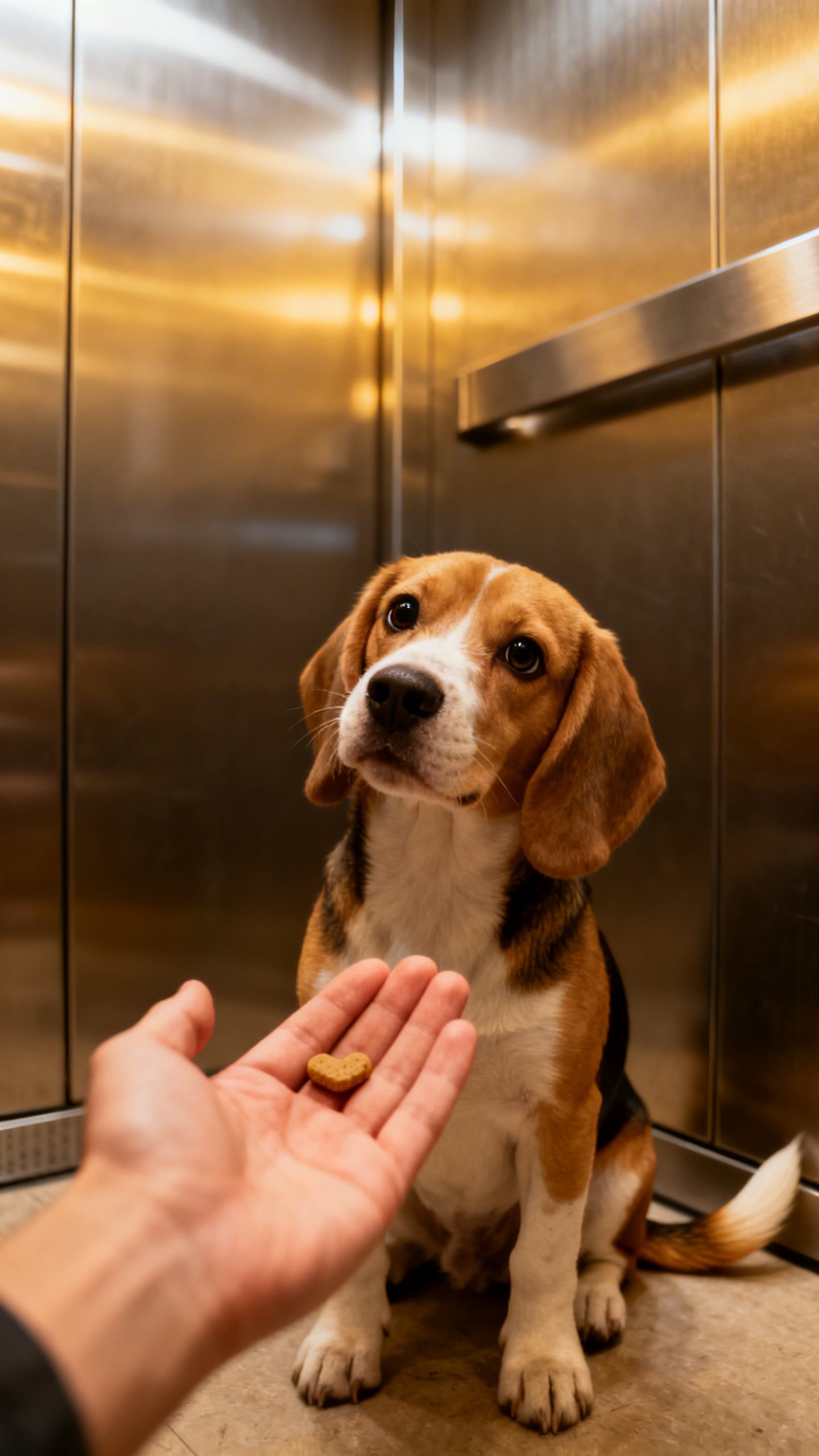
- Elevator etiquette: Teach sit-and-wait before the doors open. Step in, reward.
Hear a ding? Treat. See a suitcase?
Treat again. Your goal: elevator = snack tube.
- Hallway strolls: Keep sessions short. Practice loose-leash walking, passing doors, ignoring dropped objects (aka random dust bunnies), and pausing when you hear voices.
- Stair masters: Slow and steady.
Reward for one step at a time. If your pup bunny-hops or panics, back up and reset.
- Lobby greets: Ask friendly neighbors for “hands-off hellos.” Treat your pup while they stand nearby and talk to you. If all goes well, let the pup sniff a shoe or hand for 1-2 seconds, then call them back for a reward.
Keep it snappy.
Create a “Calm Zone” at Your Door
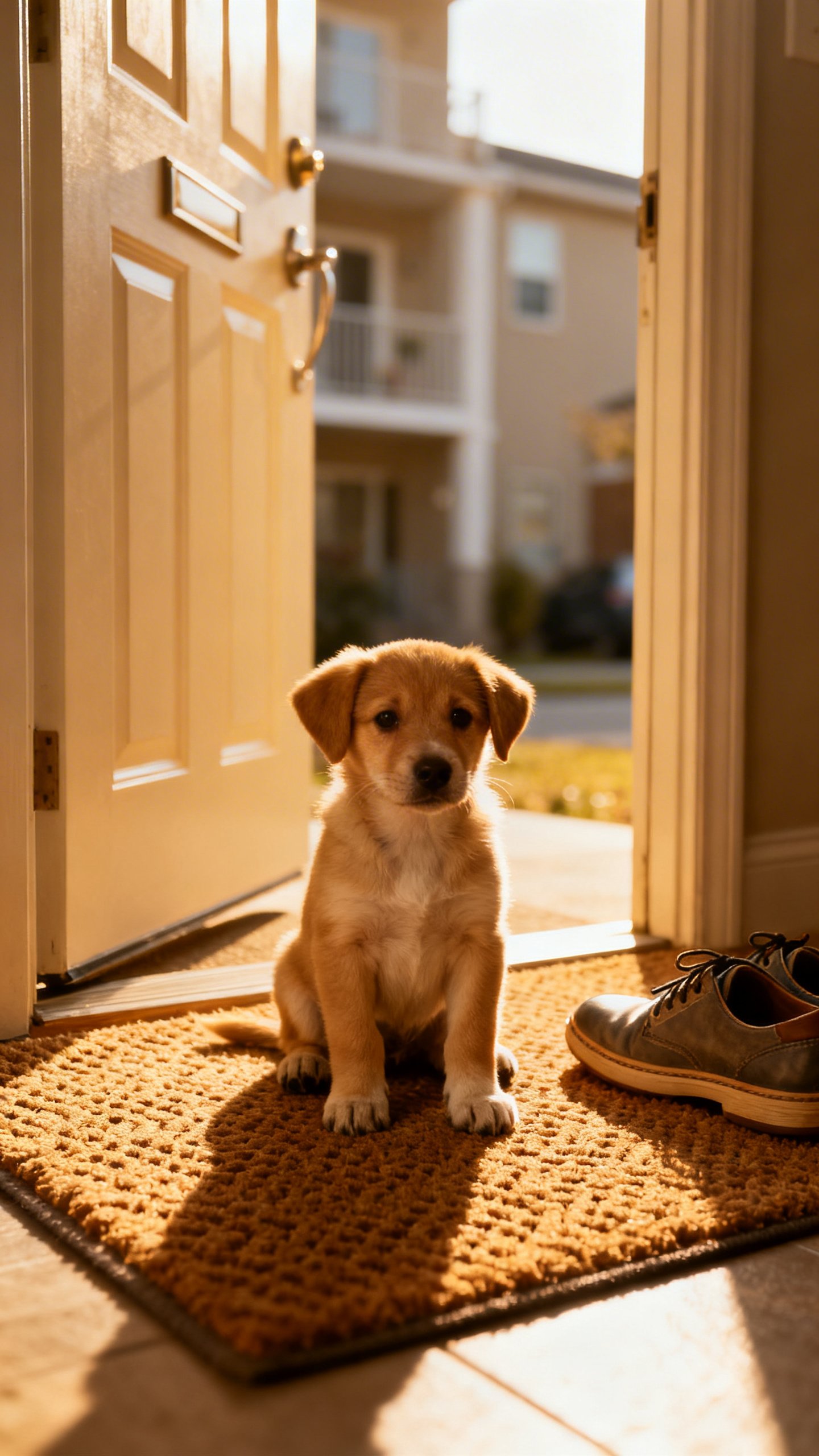
Your door is chaos central—footsteps, packages, mystery smells. Teach your pup to go to a mat and park it. Mark and reward for:
- Door knock = go to mat
- Door opens = keep four paws grounded
- Guest enters = quick sniff, then back to mat for a chew
This turns greetings from rugby scrum to civilized brunch.
Start with Controlled Dog-Dog Time
Random dog park intros can overwhelm puppies, especially in tight spaces.
You control the vibe instead.
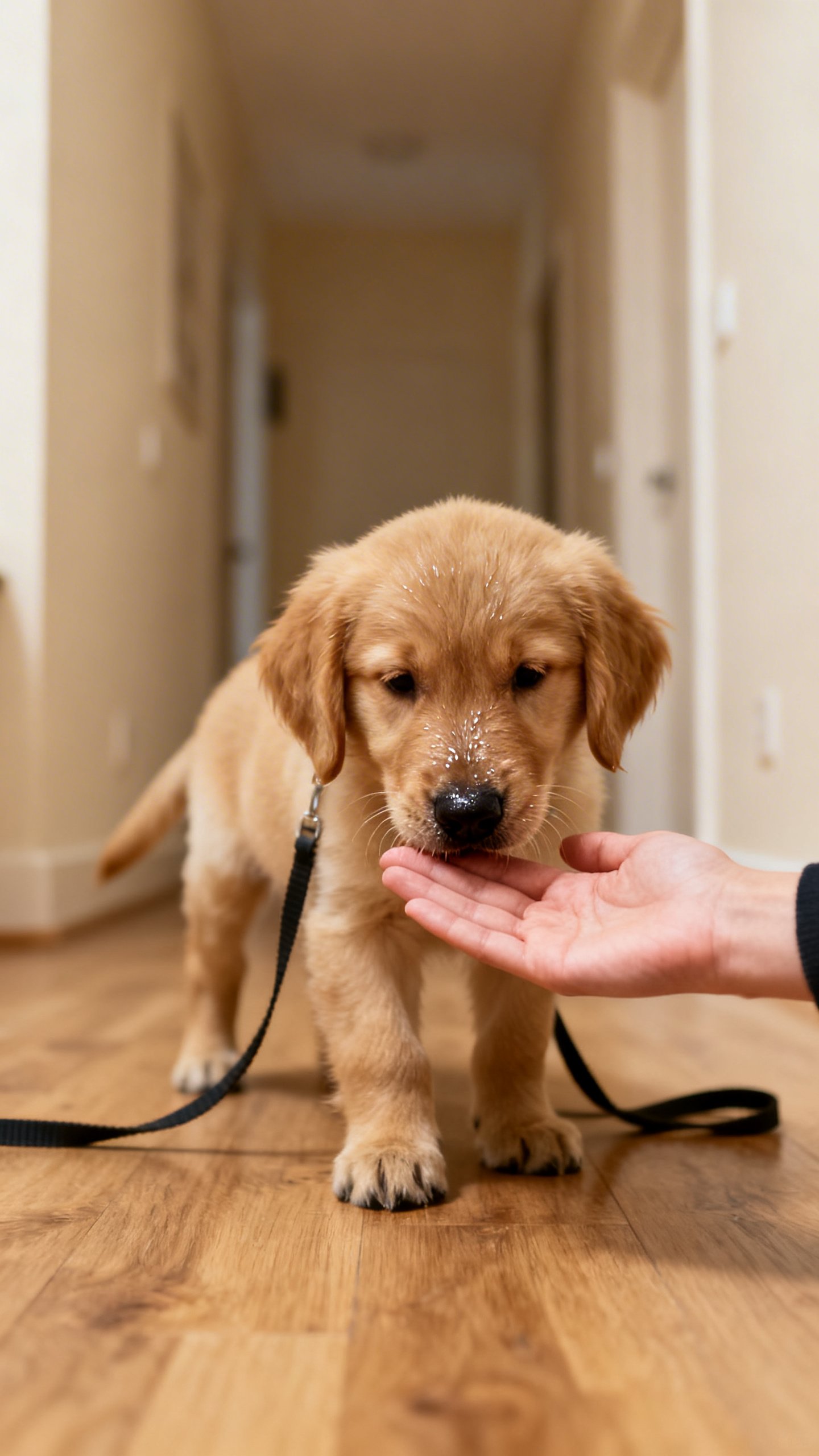
- One-on-one first: Invite a fully vaccinated, gentle dog for a short meet in a quiet area. Leashes loose, humans cool. Keep it under 10 minutes.
- Parallel walks: Walk 10-15 feet apart, reward for focusing on you.
Slowly close the gap. When both dogs look soft and wiggly, allow a brief hello.
- Sniff breaks: Interrupt play every 30-60 seconds with a cheerful “This way!” to reset arousal. If both pups can disengage and re-engage, you’re golden.
Green Flags vs.
Red Flags
Green flags: curved bodies, loose tails, frequent breaks, play bows, self-handicapping (big dog lowering to play). Red flags: stiff posture, hard stares, full-speed charges, chin-over-shoulder, pinning. If you see red flags, cheerfully separate and try again another day. No drama.
Make the City Your Classroom
Your neighborhood offers more socialization opportunities than any backyard ever could.
You just need to curate them.
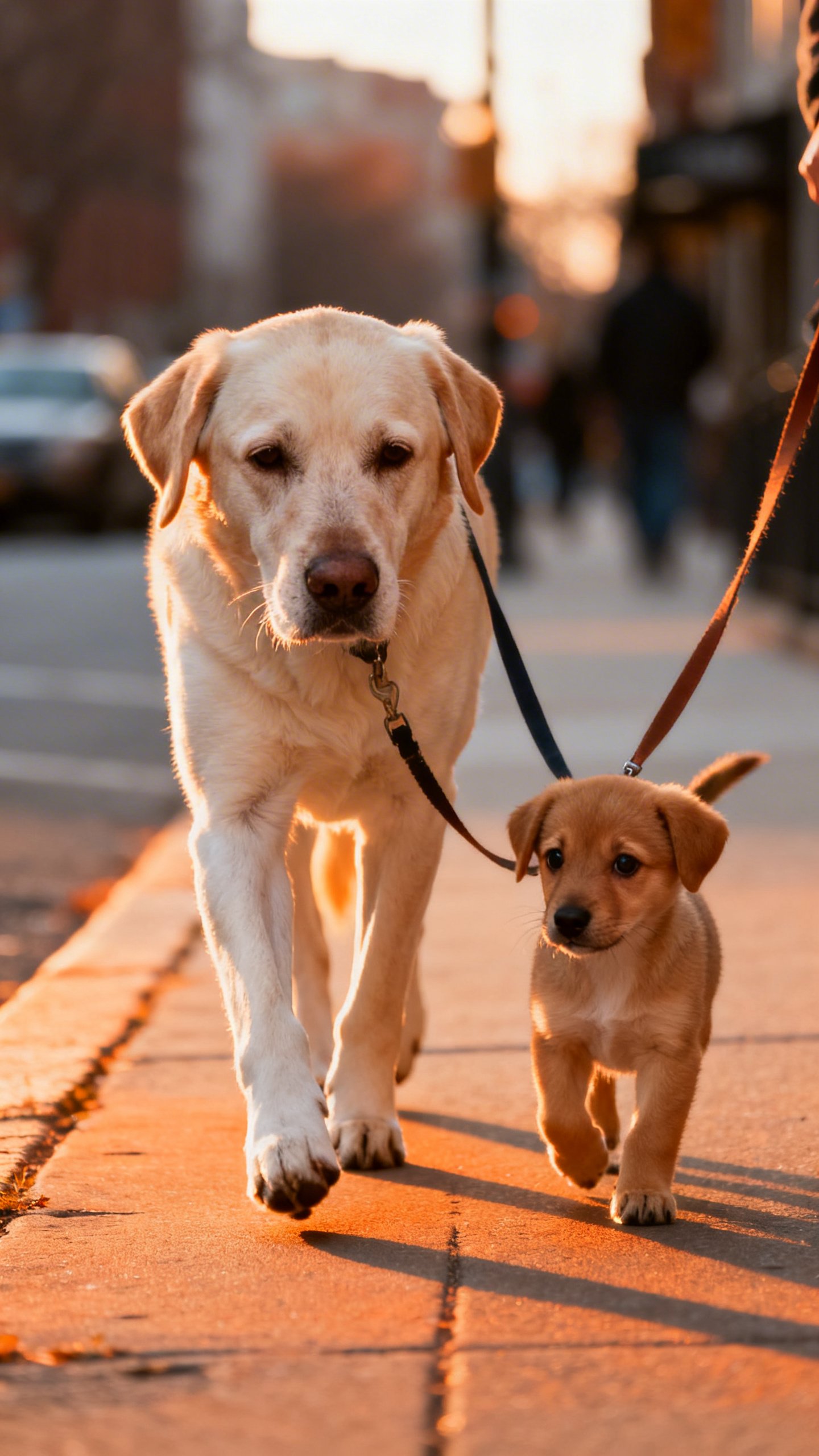
- Early morning field trips: Explore quieter sidewalks before the rush. Reward for ignoring joggers and bikes from a distance.
- Hardware stores and pet-friendly shops: Short visits only. One aisle, three treats, out.
End on a win.
- Outdoor cafes: Sit far from foot traffic at first. Give your pup a stuffed Kong or chew so they associate “people-watching” with relaxation.
- Transit practice: Before you ride, just watch buses or trains from afar. Treat for calm as they arrive and depart.
Build to short rides once your vet clears it.
Noise Desensitization at Home
Use low-volume sound playlists (sirens, fireworks, babies crying). Pair with treats or a chew. Start barely audible.
If the ears perk but the body stays relaxed, you’re at the right level. Slowly increase over days. FYI: jump scares help nobody—keep it gradual.
Plan Short, Sweet Sessions (Your Secret Weapon)
Puppies learn best in tiny doses.
Spacing matters more than intensity. Daily game plan (15–25 minutes total, split up):
- 2–3 micro-walks: 5–10 minutes each, different routes, practice sits and check-ins
- 1 novelty session: meet one new object/person/sound
- 1 calm settle practice: chew time on a mat with mild distractions
Use a treat tier system:
- Level 1 (easy): kibble for hallway sits
- Level 2 (medium): soft training treats for elevator rides
- Level 3 (spicy): chicken/cheese for skateboard sightings or loud trucks
IMO, people underestimate how far consistent 3-minute reps can take you. Stack those reps and watch confidence grow.
Leash Manners and “Focus in Chaos”
In apartments, your pup will meet stimuli at nose range—fast. Teach skills that keep both of you sane.
- Name game: Say the name once.
Mark and treat for eye contact. Practice in every room, then hallway, then outside.
- Let’s Go cue: Teach a cheerful turn-away. Lure with a treat at your knee, reward after 3–4 steps.
This saves you when the elevator opens to a Great Dane.
- Hand target: Present your palm at puppy nose level. Pup boops hand, you treat. Use it to guide past people or through doors.
- Settle on cue: Reward for choosing to lie down on a mat.
Build duration with random treats. Great for guests or coffee shop sits.
Management Tools You’ll Actually Use
- Front-clip harness: Better steering, less pulling drama
- Chews and puzzles: Keep the brain busy during new sights and sounds
- Long line (in safe areas): Freedom to explore without chaos
- High-value treat pouch: Think “chicken purse”—you’ll thank me later
Health, Timing, and Safety (Yes, The Boring But Crucial Bit)
Socialization starts early—ideally between 8–16 weeks—while your puppy forms opinions about everything. Balance exposure with disease risk.
- Vaccination status matters: Ask your vet what’s safe now.
Avoid high-risk dog areas until fully vaccinated.
- Clean zones first: Apartment hallways, friend’s yards, carrier rides to watch the world, puppy classes with vaccine checks.
- Watch stress signals: Lip licking, yawning, tucked tail, avoidance. If you see them, create distance, then feed treats. End the session on a small win.
FYI: confidence doesn’t come from “toughing it out.” It comes from feeling safe and successful, repeatedly.
FAQs
How much socialization does my puppy need each day?
Aim for a few short exposures rather than marathon outings.
Think 2–3 micro-walks plus one new experience (a new person, object, or sound). Keep sessions short, end before your pup gets tired or cranky, and always leave them wanting more.
What if my puppy seems scared of people or noises?
Back up to where your pup notices but doesn’t panic. Feed treats while the scary thing happens at a distance.
Gradually decrease the distance over days. Never force contact—your puppy decides how close to get. Confidence beats speed, IMO.
Can I socialize my puppy before they’re fully vaccinated?
Yes, with caution.
Use controlled environments: your apartment, friends’ homes with healthy adult dogs, reputable puppy classes that require vaccines and sanitize well. Avoid dog parks, pet store floors, and random sidewalk meet-and-greets until your vet gives the green light.
How do I handle rude dogs or off-leash encounters?
Turn and go. Use your “Let’s Go” cue and put your body between your pup and the other dog if needed.
Toss a handful of treats at the approaching dog to buy you space. It’s not rude to leave; it’s smart.
My neighbors love my puppy—should everyone pet them?
Only if your puppy says yes. Look for wiggly bodies, soft eyes, and a voluntary approach.
If your pup leans away or freezes, thank the neighbor and try a “look but don’t touch” session with treats. Advocating for your pup now prevents reactivity later.
Do I need a trainer?
A good positive-reinforcement trainer fast-tracks progress and helps you read body language. Group puppy classes add safe, structured exposure.
Not required, but highly recommended—especially if you feel stuck.
Wrap-Up: Small Spaces, Big Wins
Apartment life doesn’t limit your puppy—it sharpens your strategy. Keep exposures short, pair everything new with something awesome, and practice a few core skills daily. Curate calm, celebrate curiosity, and quit while you’re ahead.
Do that for a few weeks and you’ll have a chill, confident city pup who can ride an elevator like a pro and ignore a skateboarding teenager. Honestly, that’s the dream.
Related Posts