You clip on the leash, open the door, and—boom—your dog turns into a sled team captain. You’re water-skiing down the sidewalk, neighbors judging, shoulder screaming. Sound familiar?
Good news: leash manners aren’t magic. You can teach your dog to walk with you, not against you, and it’s simpler than you think.
Why Dogs Pull (And Why It’s Not Personal)
Dogs don’t plot against your rotator cuff. They pull because it works.
You move forward, they sniff faster, and everyone gets amped. Here’s what fuels the chaos:
- Forward motion rewards pulling. Every step reinforces the behavior.
- Excitement overload. Smells! Squirrels! People!
Your dog’s brain goes “WHEE.”
- No one taught them a better way. Heel doesn’t come standard, sadly.
The fix? Stop rewarding pulling. Start rewarding walking near you.
That’s the whole game.
Gear That Makes Walking Easier (Not Meaner)
Use humane, no-pain tools that give you leverage without drama.
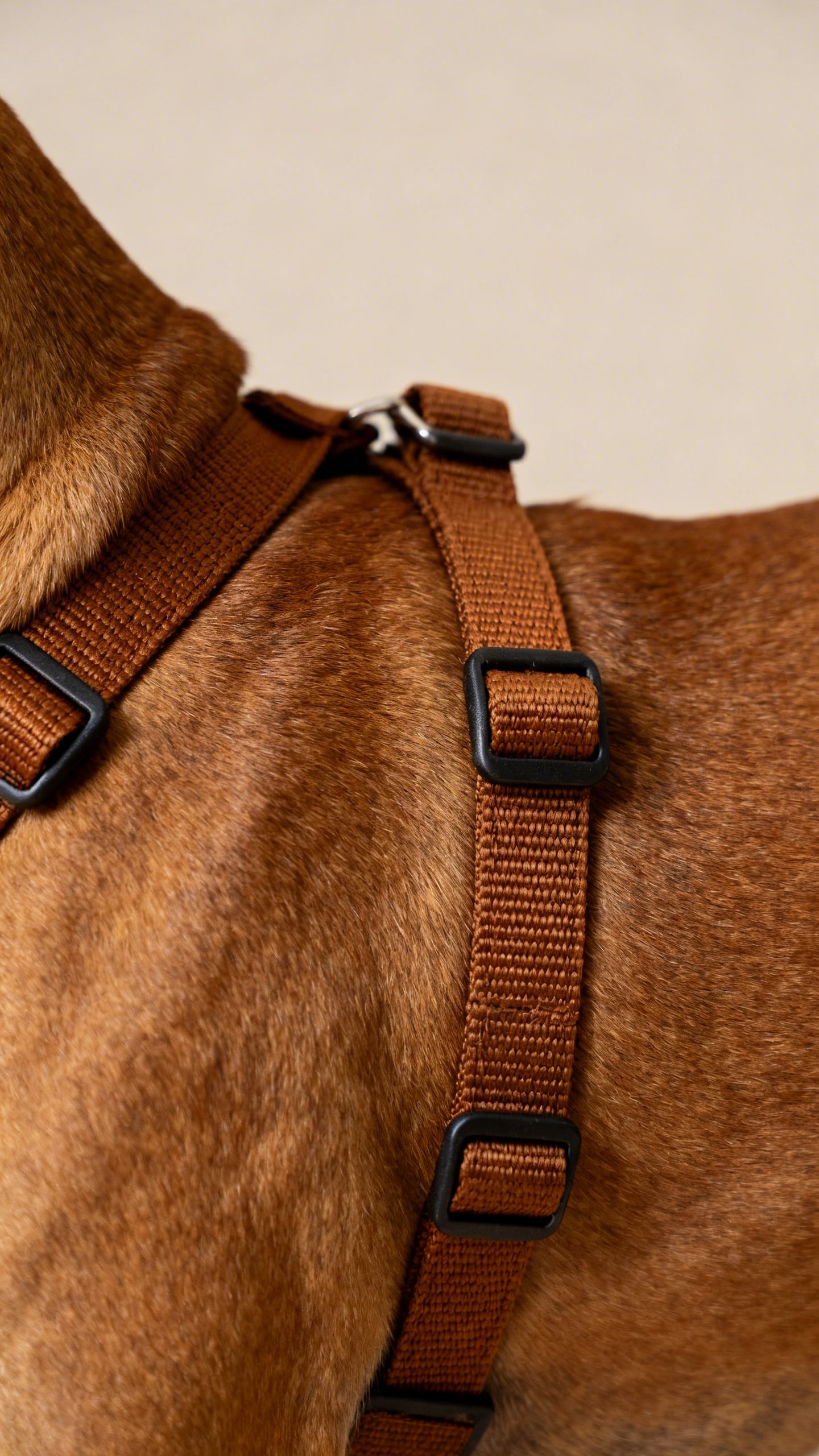
- Front-clip harness: Clips at the chest and redirects pulling. Great for most dogs.
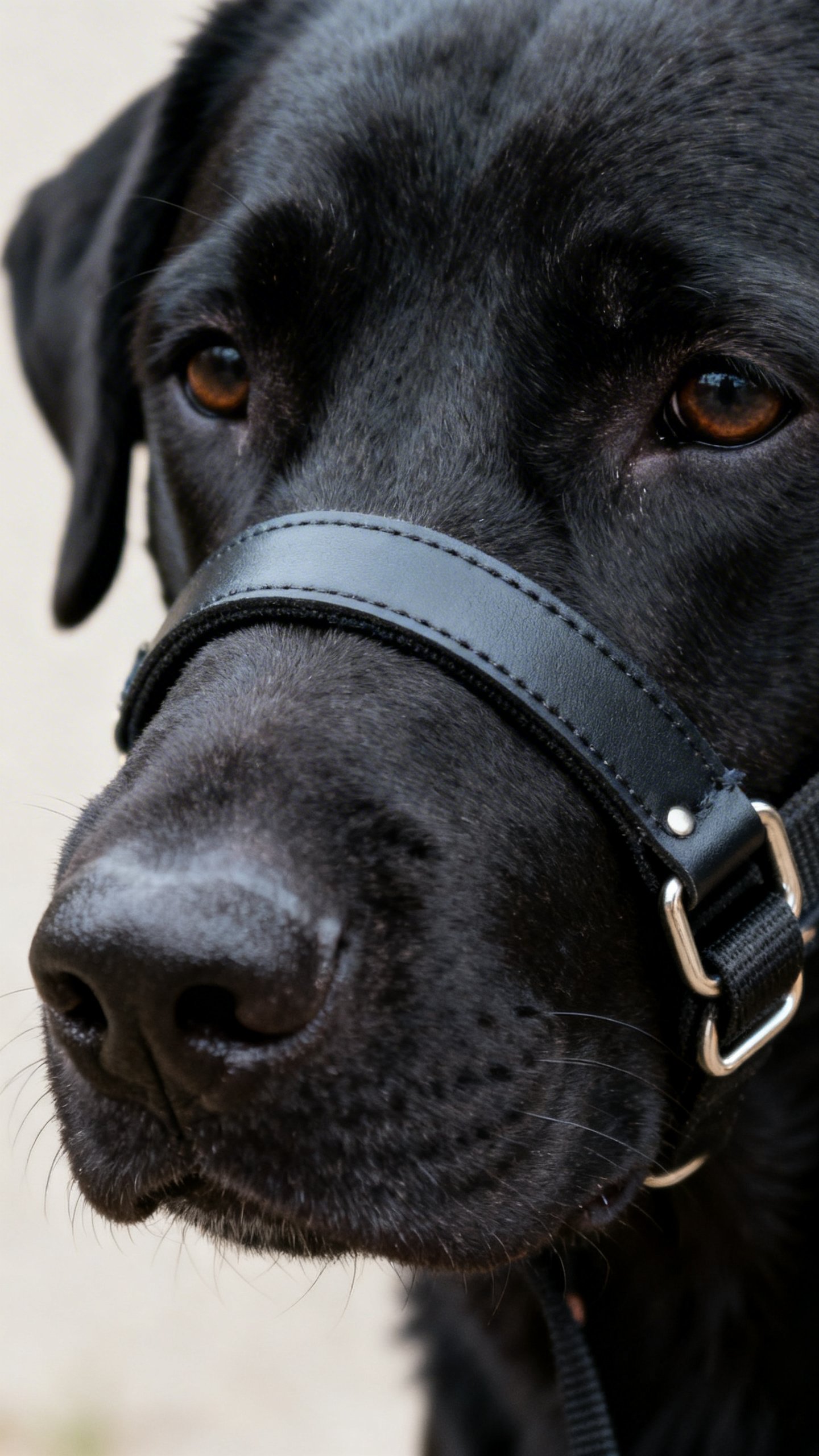
- Head halter: Extra control for strong pullers, but introduce it slowly with treats.
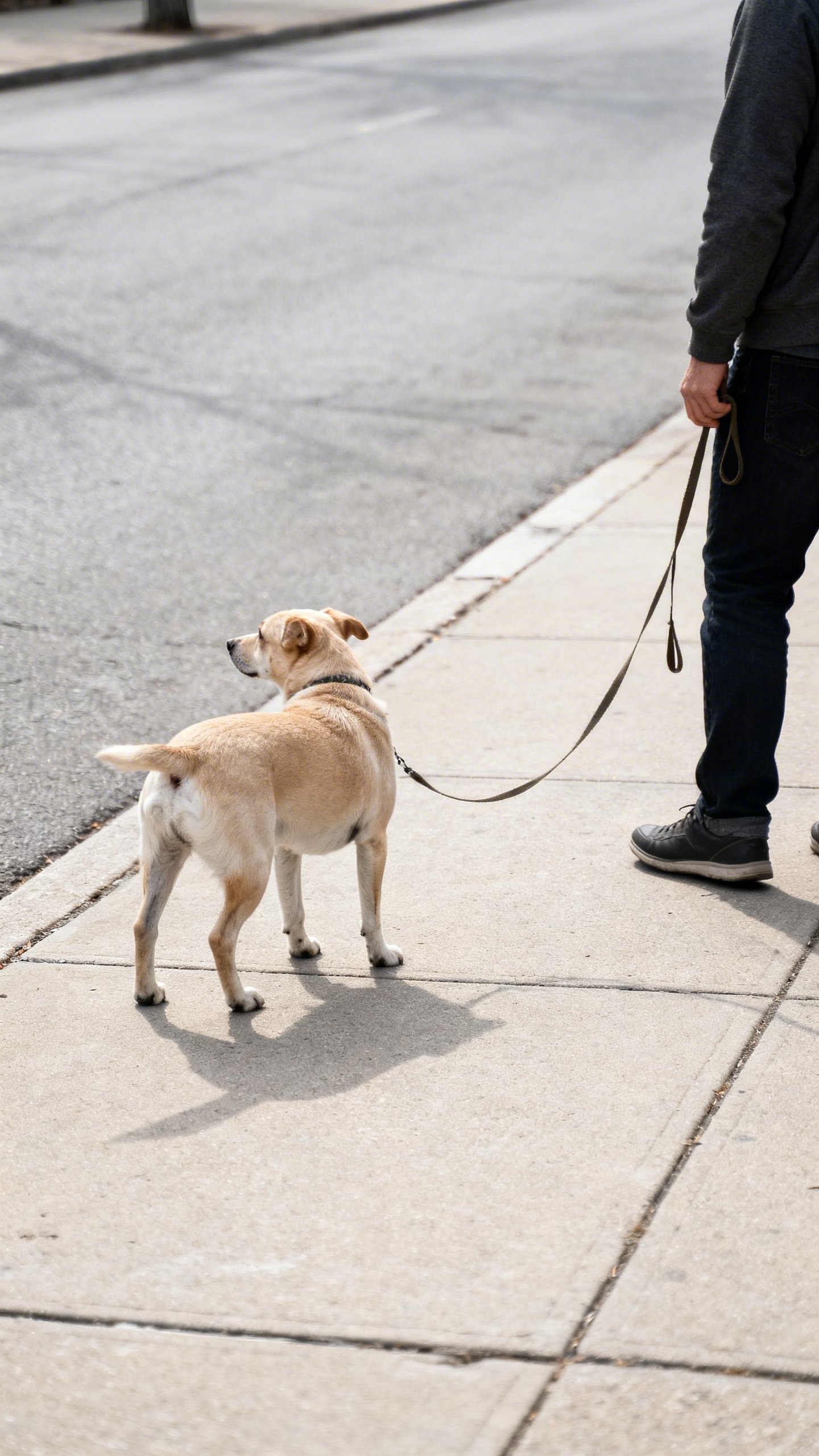
- 6-foot leash: Skip retractables while training—those literally reward pulling.
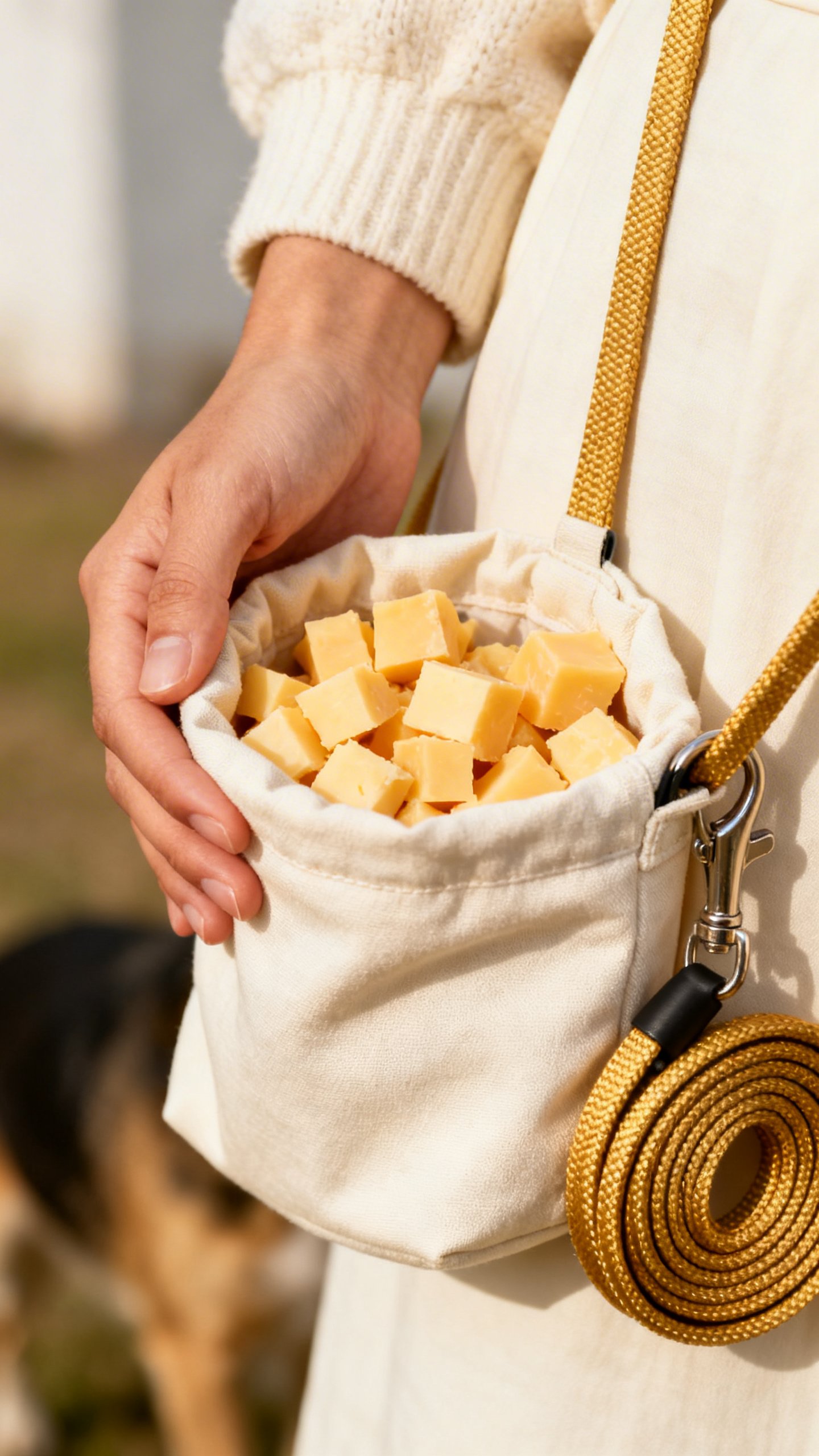
- Treat pouch + high-value rewards: Cheese, hot dogs, freeze-dried liver—bring the good stuff.
FYI: Avoid prong, choke, or shock collars. You’ll often get fallout like fear or reactivity—and you’ll still need to train.
Fitting Matters
Make sure the harness sits snug but not tight (two-finger rule).
If the neck gapes or the chest strap rides too low, your dog will Houdini out of it or chafe. Not a vibe.
The Core Skill: Reinforce Where You Want Your Dog
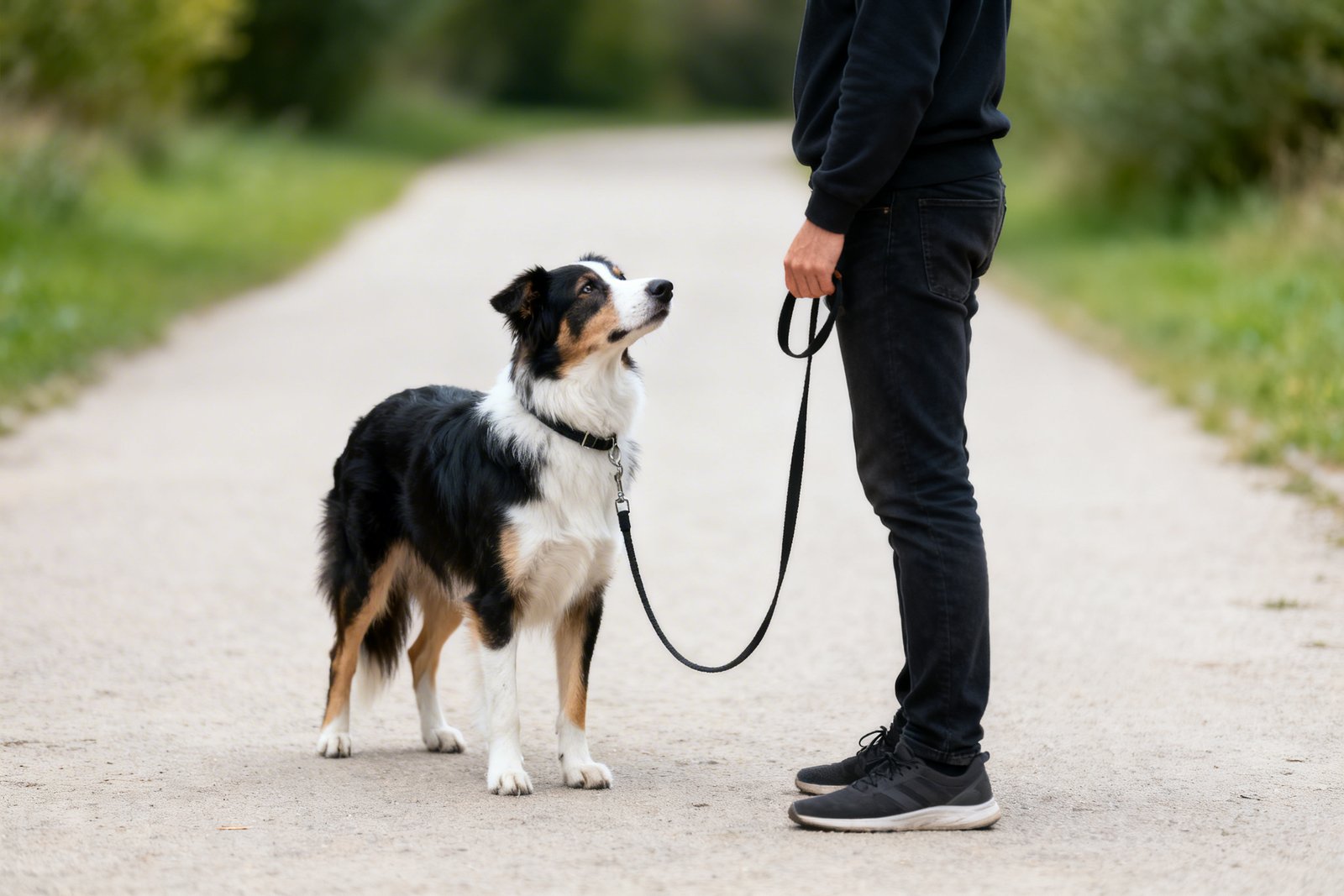
Pick your “reinforcement zone”—usually by your left or right knee. That’s where treats rain from the sky.
Your dog thinks, “Oh, the snack bar lives here.” Boom—position trained. Start indoors with zero distractions:
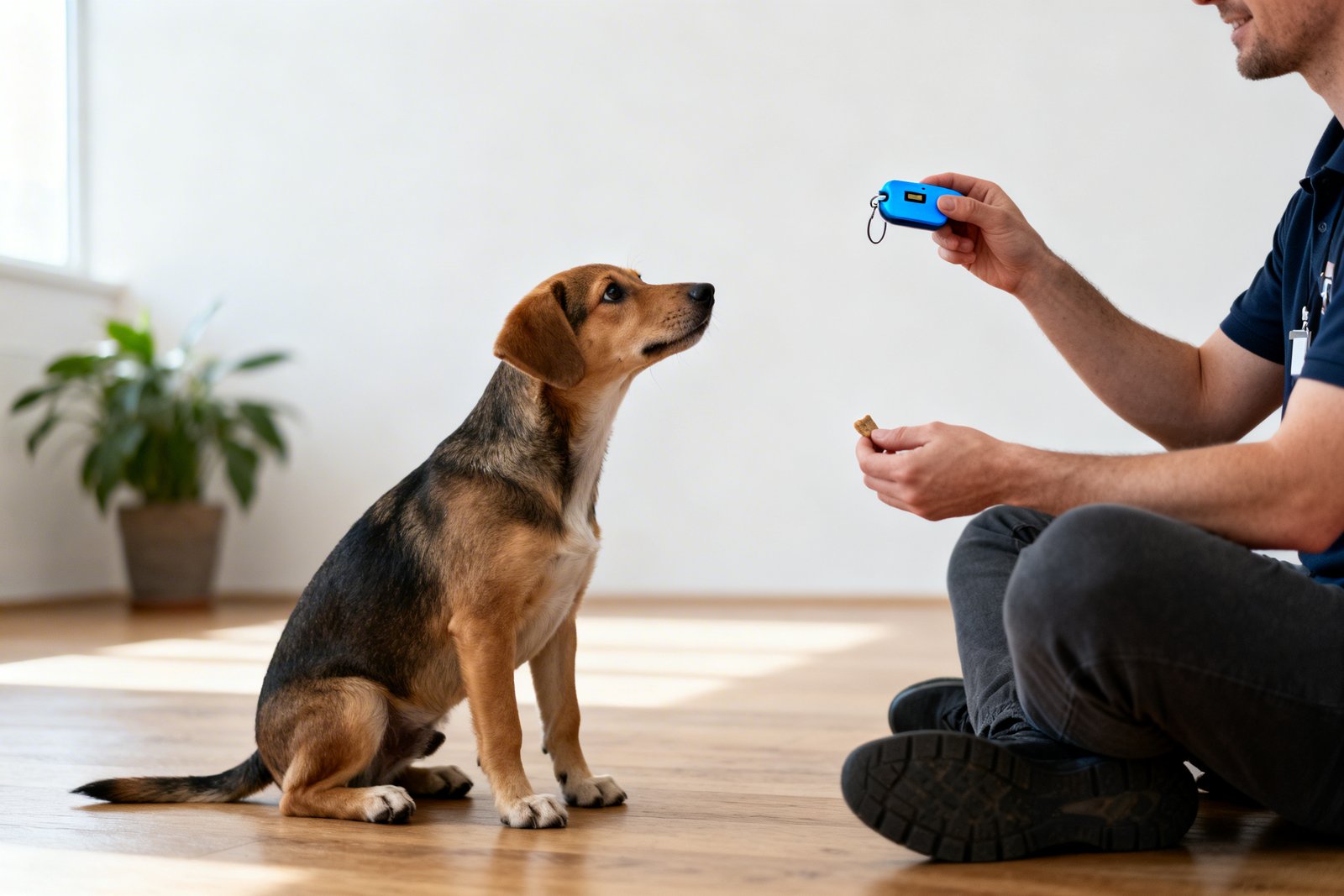
- Stand still. When your dog comes near your leg, mark it (“Yes!” or a click) and treat by your knee.
- Take one step. If your dog stays near you, mark and treat.
If not, reset.
- Build to 5–10 steps, feeding every step at first.
Short sessions. Two minutes, 2–3 times a day. Easy wins beat marathon misery.
What If My Dog Zooms Ahead?
Don’t yank.
Just stop. Plant your feet. When your dog’s leash slackens or they check back, mark and feed by your leg.
You teach: “Pulling = statue. Being near me = party.”
Taking It Outside: Level Up Without Melting Down
Outside equals harder. Lower criteria and pay more. Phase it in like this:
- Driveway or yard: One step, treat.
Repeat. Keep it boring and easy.
- Quiet sidewalk: Treat every 1–2 steps at first. Yes, you’ll feel ridiculous.
It works.
- Distracting spots: Increase distance from triggers. Pay more frequently.
If your dog pulls:
- Be a tree: Stop. Wait for slack.
Reinforce near your leg.
- Do a quick turn: Say “Let’s go!”, pivot 180°, reward when they rejoin.
- Use pattern games: Step-step-treat, step-step-treat. Rhythm calms brains.
IMO, 10 minutes of quality practice beats a 45-minute tug-of-war.
Teach Two Clutch Cues: Let’s Go + Leave It
These cues save your sanity when life throws squirrels at you.
“Let’s Go” = Move With Me, Now
- Say “Let’s go!” in a cheerful voice.
- Turn away from the distraction.
- As your dog follows, mark and treat several times in a row while moving.
Practice in low-stress spots first so it works when you need it.
“Leave It” = That’s Off Limits
- Hold a treat in a closed fist. Dog sniffs/licks?
Nothing happens.
- Dog backs off or looks at you? Mark and give a different treat from your other hand.
- Add the cue “Leave it” right before you present your fist.
Progress to dropping a treat on the floor. Then try it outside with sticks, chicken bones, or whatever chaos your street offers.
Reinforcement: Pay Smart, Fade Slowly
You’ll start with lots of treats.
Then you’ll taper, not ghost. Use a pay schedule that won’t tank your progress:
- Stage 1: Treat every step or two in the zone.
- Stage 2: Treat every 3–5 steps. Add verbal praise and gentle petting.
- Stage 3: Randomize rewards. Sometimes a treat after 10 steps, sometimes after 3.
Keep it exciting.
- Stage 4: Real-life rewards: sniff breaks, greeting a friend, hopping on a rock. Ask for a few good steps, then release to “Go sniff!”
Your dog works for what they want. Snacks are great, but sniffing a bush?
That’s premium currency.
Common Mistakes That Keep You Stuck
Let’s fix the usual suspects fast:
- Inconsistent rules: Sometimes you let pulling slide. Your dog learns to gamble. Consistency wins.
- Too-big jumps: From living room to busy park.
Scale up gradually.
- Underpaying: Kibble vs. squirrel isn’t a fair fight. Bring better treats.
- Reel-in tugging: Pulling back just creates a contest. Stop or change direction instead.
- Overlong sessions: Quit while you’re ahead.
Short, frequent reps build habits.
Special Note for Reactive Dogs
If your dog barks and lunges at dogs/people, work below threshold (more distance), use high-value treats, and keep sessions short. If reactivity persists, bring in a qualified force-free trainer. No shame—reactivity is an emotional issue, not a manners issue.
Sample 2-Week Training Plan
Keep it simple.
Track progress. Celebrate tiny wins.
- Days 1–3: Indoors. Reinforcement zone, 1–5 steps.
Pay every step. 3 sessions/day, 2 minutes each.
- Days 4–6: Driveway/yard. Add “Let’s go.” Pay every 1–2 steps. End with a sniff party.
- Days 7–10: Quiet sidewalk loops.
If pulling starts, freeze or turn. Treat every 2–4 steps; random jackpots for great focus.
- Days 11–14: Slightly busier routes. Mix in “Leave it.” Treat every 4–8 steps.
Earn sniff breaks after 10–20 good steps.
IMO, you’ll see real changes by week two if you stay consistent. If not, reduce distractions and increase payment.
FAQs
Should I use a retractable leash while training?
Skip it. Retractables reward pulling because your dog learns that tension makes the leash longer.
Use a standard 6-foot leash until your dog understands loose-leash skills, then consider a long line for sniffy decompression walks.
What do I do when my dog hits the end of the leash?
Become a tree. Stop moving. Wait for a slack leash or an eye flick toward you, then mark and reward by your leg.
If your dog struggles to reset, cheerfully say “Let’s go!” and turn away to an easier direction.
Can multiple people walk the dog during training?
Yes, but sync your rules. Same gear, same cues, same reinforcement zone. If one person allows towing to the park, you’ll sprint in circles forever.
Create a 1-page “walk plan” and stick it on the fridge.
My dog only walks nicely when I have treats. Help?
You faded too fast. Bring treats back, pay generously, then shift to a variable schedule.
Also use life rewards—“Go sniff,” “Say hi,” hop on a stump. If nice walking earns freedoms, the behavior sticks even when snacks disappear.
Is heel the same as loose-leash walking?
Nope. Heel means tight precision at your side, usually for short bursts. Loose-leash walking means your dog can cruise and sniff, as long as the leash stays slack. Train both if you like, but use LLW for real life.
What if my dog is strong and I feel unsafe?
Use a front-clip harness or head halter, choose low-distraction routes, and shorten sessions.
Practice impulse control games at home. If you still feel unsafe, get a force-free trainer to coach you in person. Safety first, ego second.
Wrap-Up: From Sled Dog to Sidekick
You don’t need superhuman biceps.
You need consistency, good timing, and rewards your dog cares about. Start easy, pay well, and don’t move when your dog pulls. Do that for two weeks and you’ll feel the shift.
Keep it up and your walks turn from tug-of-war to “Look at us go”—no sled required.
Related Posts