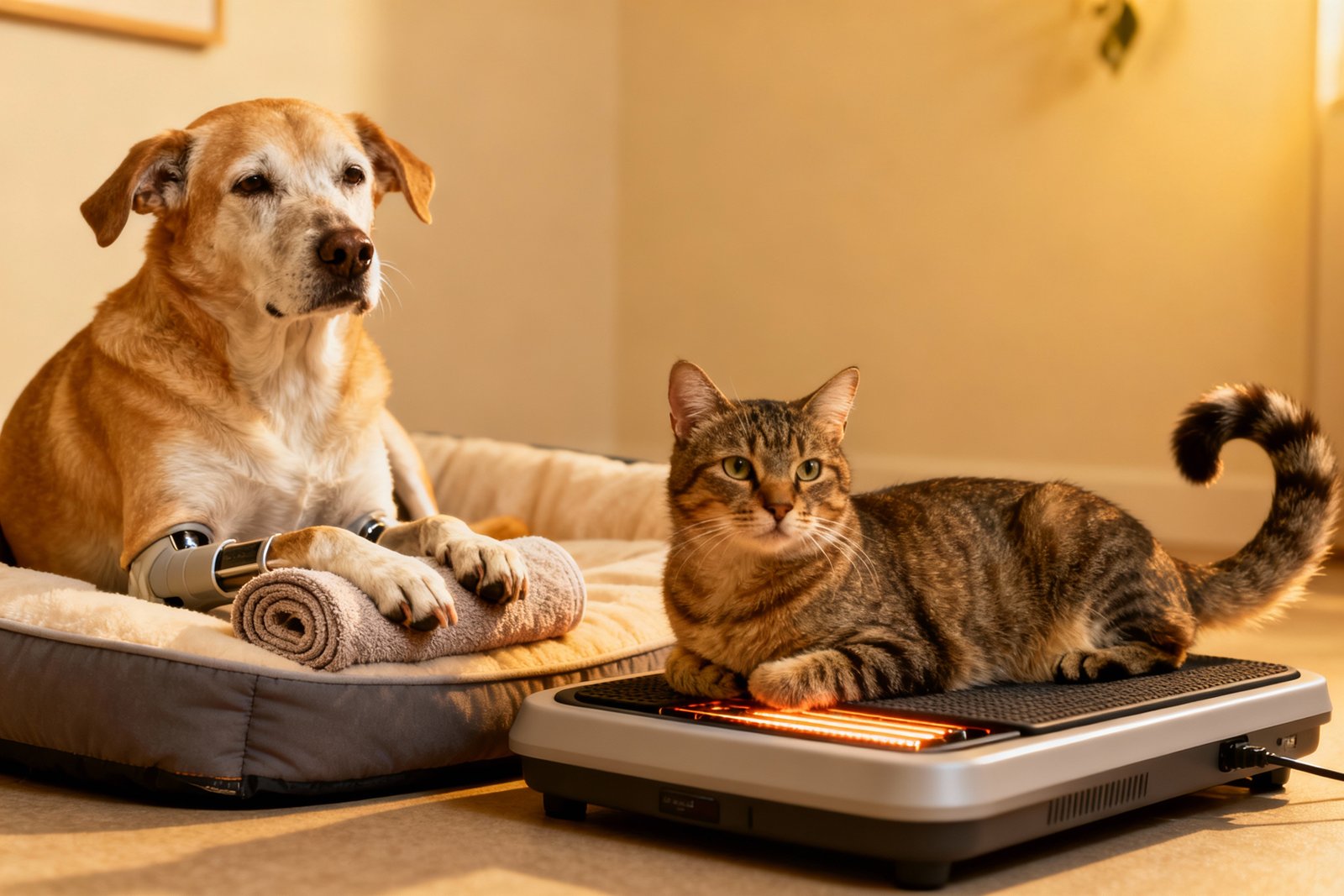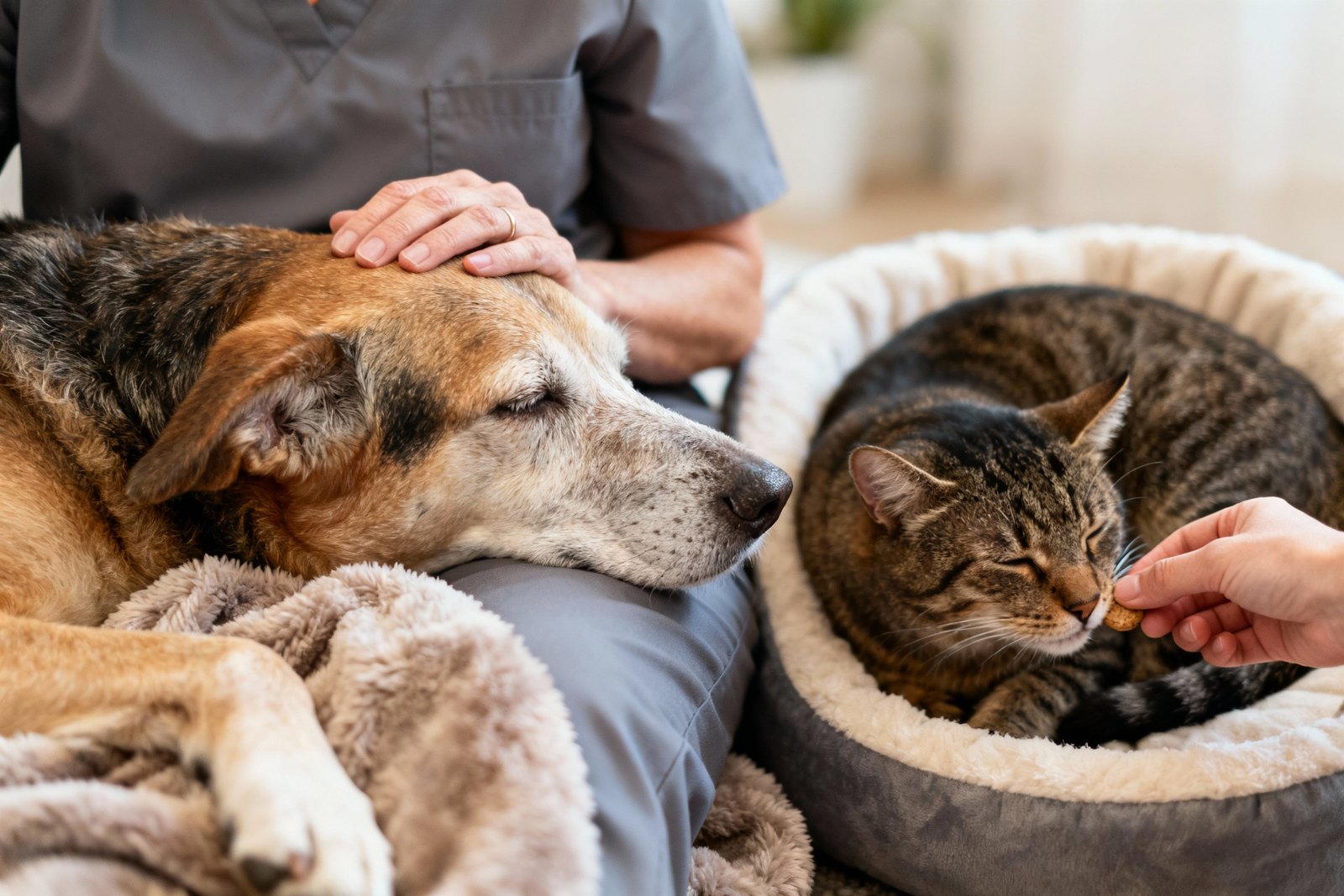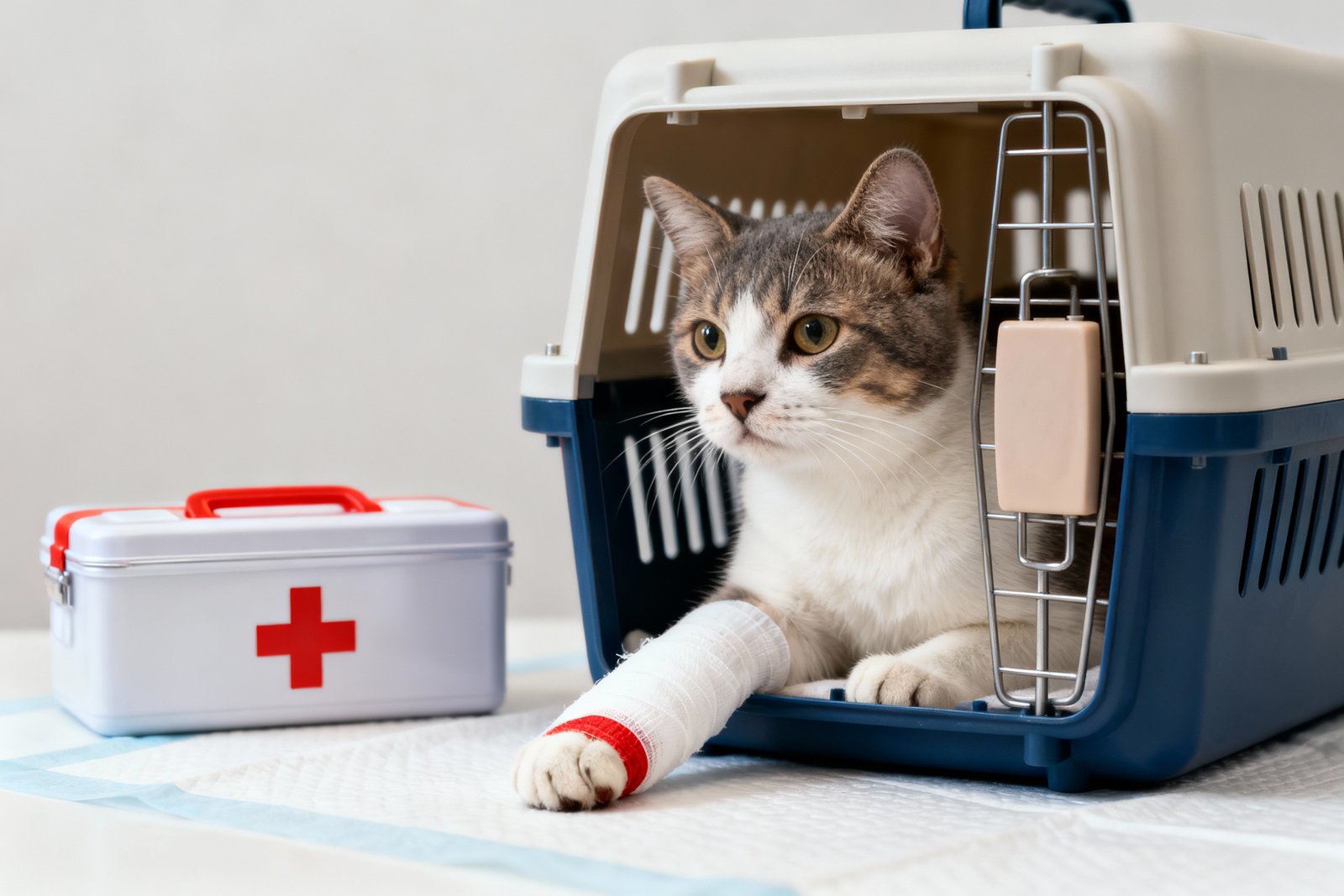
You never plan for your dog to eat a sock or your cat to swat a bee and swell like a marshmallow. Yet here we are. Pet emergencies happen fast, and they don’t care if you just sat down with a hot coffee.
The good news? A little prep lets you go from panicked Googling to cool-headed hero in seconds.
Build a Grab-and-Go Pet Emergency Kit

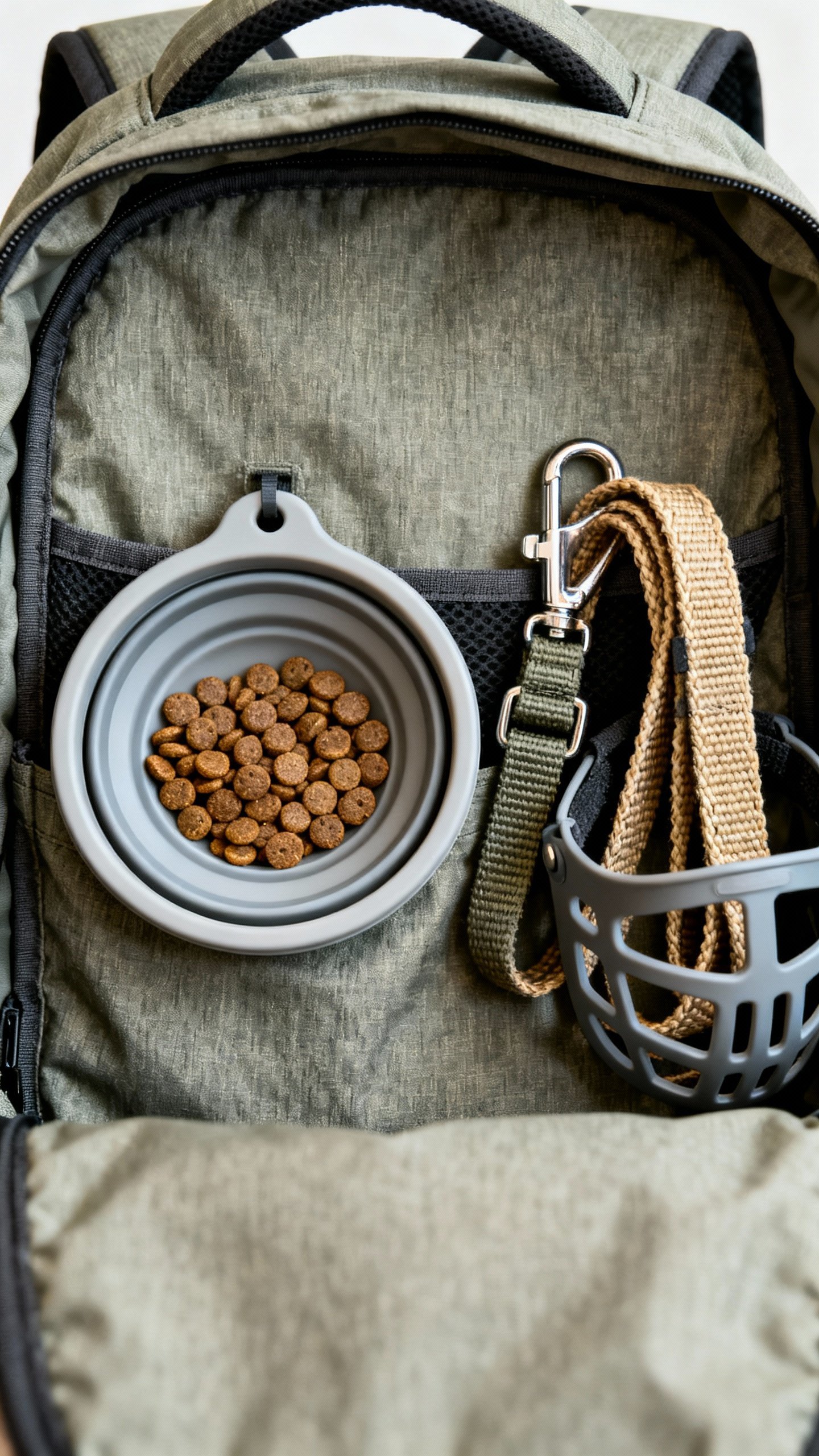
A solid kit saves time and stress. Pack it in a small backpack so you can grab it with one hand while you leash the chaos. Must-haves:
- Copies of vet records, meds list, and microchip numbers in a waterproof bag
- 3–5 days of food and water, plus collapsible bowls
- Leash, harness, muzzle (even friendly pets bite when terrified)
- Blanket or towel for warmth and makeshift stretcher
- Flashlight, spare batteries, poop bags, cat litter and tray liner
- Pet first-aid supplies (we’ll get specific next)
First-Aid Basics to Keep on Hand
- Gauze, non-stick pads, and vet wrap for bleeding and bandaging
- Hydrogen peroxide 3% for inducing vomiting only if a vet says so (not for wounds)
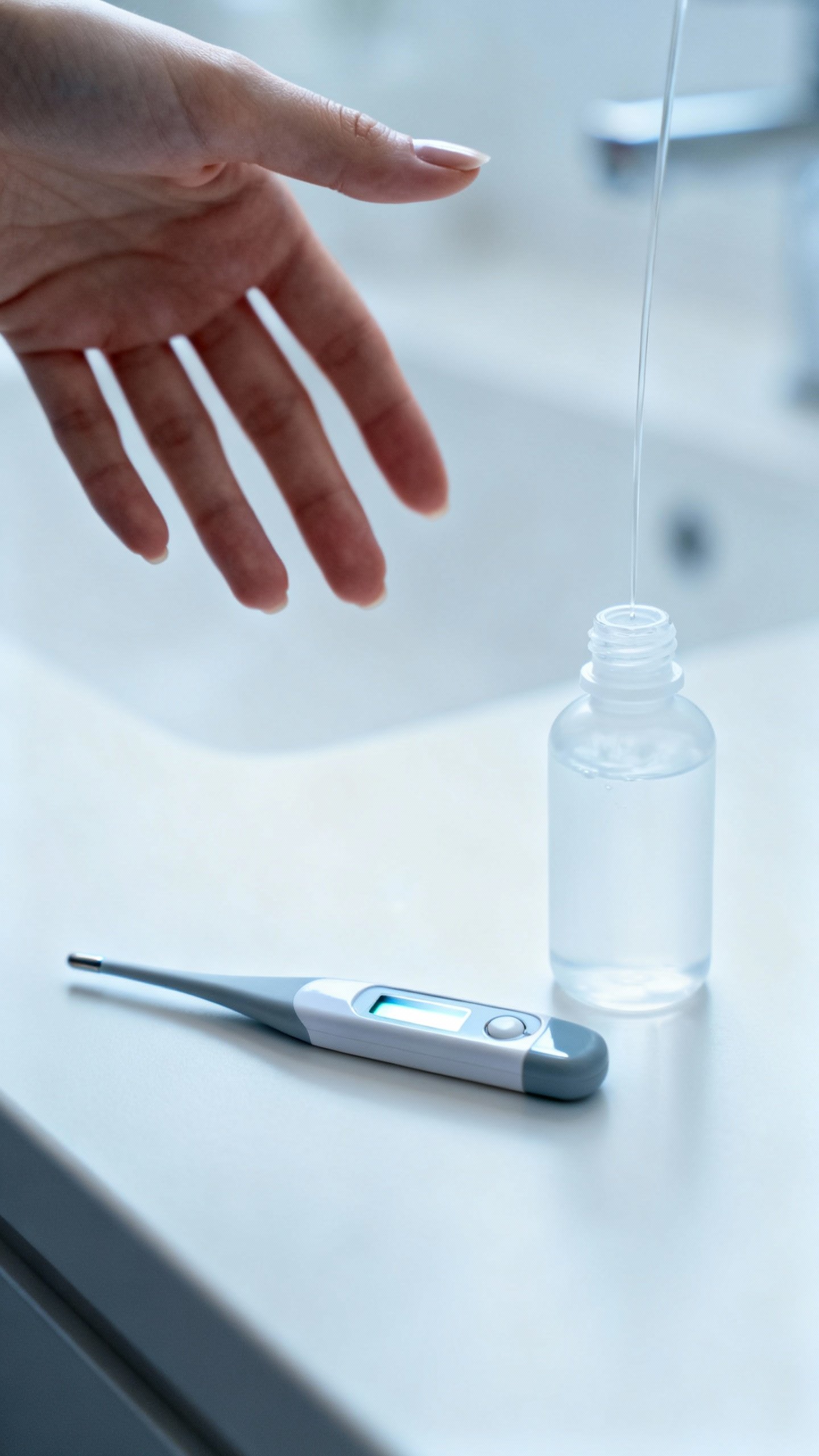
- Digital thermometer and petroleum jelly
- Saline eyewash and sterile tweezers
- Antihistamine (diphenhydramine)—ask your vet for your pet’s exact dose
- Styptic powder for nail bleeds
- Soft cone or inflatable collar to stop licking and scratching
Know the Red Flags That Mean “Go Now”
You don’t need to diagnose.
You just need to spot “not normal” and move. Head straight to emergency care if you see:
- Breathing trouble: open-mouth breathing in cats, rapid or labored breaths, blue gums
- Uncontrolled bleeding or a wound that won’t stop after 5–10 minutes of pressure
- Collapse, seizures, or extreme lethargy
- Bloated, hard abdomen with retching (possible bloat in dogs—minutes matter)
- Ingestion of toxins (xylitol, lilies, grapes/raisins, rat poison, human meds)
- Urinary blockage signs in cats: frequent trips to the box, straining, no output
FYI: If your gut says “something is off,” trust it. No one ever regrets going too early.
Poison and Toxin Triage
Your kitchen, purse, and yard hide more hazards than a toddler’s playroom. When in doubt, call poison control with the exact item and how much your pet got. Top offenders:
- Cats: lilies (all parts), essential oils, onion/garlic, acetaminophen
- Dogs: xylitol (sugar-free gum), grapes/raisins, chocolate, ibuprofen
- Both: rodenticides, antifreeze, some houseplants, cannabis edibles
What to Do Right Now
- Don’t induce vomiting unless a vet or poison control tells you to
- Rinse skin thoroughly if topical exposure (like motor oil or pesticides)
- Save packaging for the vet
- Call your vet, nearest ER, or a pet poison hotline immediately
IMO, put the poison control number on your fridge and in your phone notes.
Bleeding, Cuts, and Broken Things
You can control a lot with calm hands and the right supplies.
Bleeding Control 101
- Apply direct pressure with gauze or a clean cloth for 5–10 minutes
- Don’t peek every 10 seconds; it restarts the bleeding
- Use styptic powder on nail quicks
- If blood soaks through, add more layers—don’t remove the first one
Wounds and Sprains
- Flush wounds with saline, not hydrogen peroxide
- Wrap with non-stick pad + gauze + vet wrap (snug, not tourniquet tight)
- Restrict movement and use a towel sling for back-end support in larger dogs
- Head to the vet for deep cuts, gaping wounds, or limping that lasts
Heat, Cold, and Weather Disasters
Mother Nature does not care about your schedule.
Prep now so you never improvise later.
Heatstroke Happens Fast
Signs include drooling, panting hard, bright red or pale gums, vomiting, and collapse.
- Move to shade, offer cool (not ice-cold) water
- Wet fur with cool water and use a fan
- Head to the vet ASAP; stop cooling if temp hits 103°F/39.4°C
Hypothermia and Frostbite
- Warm slowly with blankets and body heat; avoid hot pads directly on skin
- Do not rub frostbitten areas; protect them and seek care
Evacuation Readiness
- Carrier and crate training now pays off during chaos
- Keep ID tags and microchips updated
- Maintain a pet go-bag by the door, plus a spare in your car
- List pet-friendly shelters and hotels ahead of time
Choking, Bloat, and GI Emergencies
Food is love until it isn’t. Some pets inhale first, ask questions later.
Choking and Foreign Objects
- If breathing, don’t blindly fish—you can push it deeper
- If not breathing, try a quick finger sweep only if you can see the object
- Perform pet Heimlich techniques (ask your vet to demo or take a class)
- Even if you clear it, see a vet; swelling can follow
Bloat (GDV) in Large, Deep-Chested Dogs
Look for a distended belly, unproductive retching, restlessness, and drooling. This is a lights-and-sirens emergency.
Don’t wait. Drive now.
Vomiting and Diarrhea Triage
- One-off episodes? Offer water, withhold food for 6–8 hours, then bland diet
- Red flags: blood, lethargy, repeated vomiting, pain, or toys missing from the floor
Allergies, Stings, and Snakebites
Stings and bites happen in a blink, especially to curious noses.
- For mild swelling or hives, call your vet about antihistamine dosing
- Facial swelling, drooling, vomiting, or breathing issues = ER now
- Remove the stinger by scraping with a card, not tweezers
- Snakebite?
Keep calm, carry your pet, no tourniquets or cutting, and go straight to the hospital
Chronic Conditions: Plan Before the Panic
If your pet has diabetes, seizures, heart disease, or allergies, make a written plan with your vet. Emergencies hit different when you’ve already mapped them.
Condition-Specific Prep
- Diabetics: store insulin properly, carry syringes, and keep honey or corn syrup for hypoglycemia
- Seizure-prone pets: track duration, keep the area safe, and ask about at-home meds like rectal diazepam
- Cardiac patients: know normal breathing rates at rest and when to seek help
- Allergy pets: keep prescription meds handy and monitor for anaphylaxis
10 Pet-Specific Emergency Needs You Should Nail
Here’s your TL;DR checklist. Tweak it to your pet’s species, size, and lifestyle.
- A stocked pet first-aid kit with species-appropriate supplies
- Emergency contacts: your vet, 24/7 ER, poison control, and a backup adult human
- Medical records and meds list in your go-bag
- Microchip and ID tags updated with current phone and address
- Carrier/crate training for safe transport and evacuation
- Food, water, and bowls for 3–5 days
- Handling tools: muzzle, leash, towel/blanket, gloves
- Condition-specific plan for chronic issues (doses, triggers, when to go)
- Training for you: basic pet first aid and CPR (it’s worth a Saturday morning IMO)
- Household safety audit: secure trash, meds, toxic plants, and small chewables
FAQ
Should I keep hydrogen peroxide for vomiting?
Yes, but only use it if a vet or poison control tells you to and gives you a dose.
Some toxins burn worse on the way back up, and certain breeds risk aspiration. Never use it on cats without explicit vet direction.
What’s a normal temperature for dogs and cats?
Normal is roughly 100.5–102.5°F (38.1–39.2°C). Take it rectally with a digital thermometer and a bit of petroleum jelly.
Anything above 103°F or below 99°F deserves a call to your vet.
How do I transport an injured pet safely?
Use a muzzle if needed, then slide them onto a flat surface like a board or firm blanket. Keep the spine aligned, lift with help for larger pets, and minimize movement. Drive smoothly and call the clinic en route.
When should I worry about diarrhea or vomiting?
If it’s persistent, bloody, paired with lethargy, or your pet is young, elderly, or has other conditions—seek care.
One mild episode with a bright, hungry pet usually isn’t dire. Trust your gut and watch for trends.
Are human meds ever safe for pets?
Some are, most aren’t, and dosing differs wildly. Never give ibuprofen, acetaminophen (especially to cats), or cold meds.
If your vet approves something like diphenhydramine, use their exact dose, not Dr. Internet’s.
Do I need pet insurance for emergencies?
You don’t need it, but it helps when a midnight crisis hits. If insurance isn’t your jam, build an emergency fund just for your pet.
Future-you will be grateful.
Conclusion
Emergencies feel chaotic, but your plan doesn’t have to. Stock your kit, save your contacts, and practice a few basics. You’ll still have surprises—because pets—but you’ll handle them like a pro, coffee and all.
Related Posts